
The San Andreas Fault Corridor and Household Earthquake Hazards
San Mateo County lies directly within one of the most seismically active corridors in North America. The San Andreas Fault fault trace cuts directly through the Peninsula hills, running past San Bruno, Pacifica, and the Crystal Springs Reservoirs. During a major seismic rupture, unanchored residential water heaters represent one of the most severe household hazards: a standard 50-gallon water heater weighs over 450 pounds when full of water. Ground shaking readily topples unbraced tanks, rupturing pressurized water lines and snapping rigid natural gas piping.
Need Immediate Plumbing Assistance?
Call (321) 559-0657 to connect directly with an independent local plumber in San Mateo County.
California Health and Safety Code Section 19211 Explained
To prevent post-earthquake fires and structural flooding, the California State Legislature enacted Health and Safety Code Section 19211. The statute establishes that all new and replacement water heaters, as well as existing water heaters in homes being sold or transferred, must be braced, anchored, or strapped to resist horizontal motion caused by earthquake shaking. In addition, California Plumbing Code Section 507.2 mandates that the strapping system must be certified by the Division of the State Architect (DSA) or meet prescriptive local building codes.
The Legal Double-Strap Standard: Placement, Hardware, and Anchors
Achieving legal seismic compliance requires strict adherence to physical positioning and structural fastening requirements:
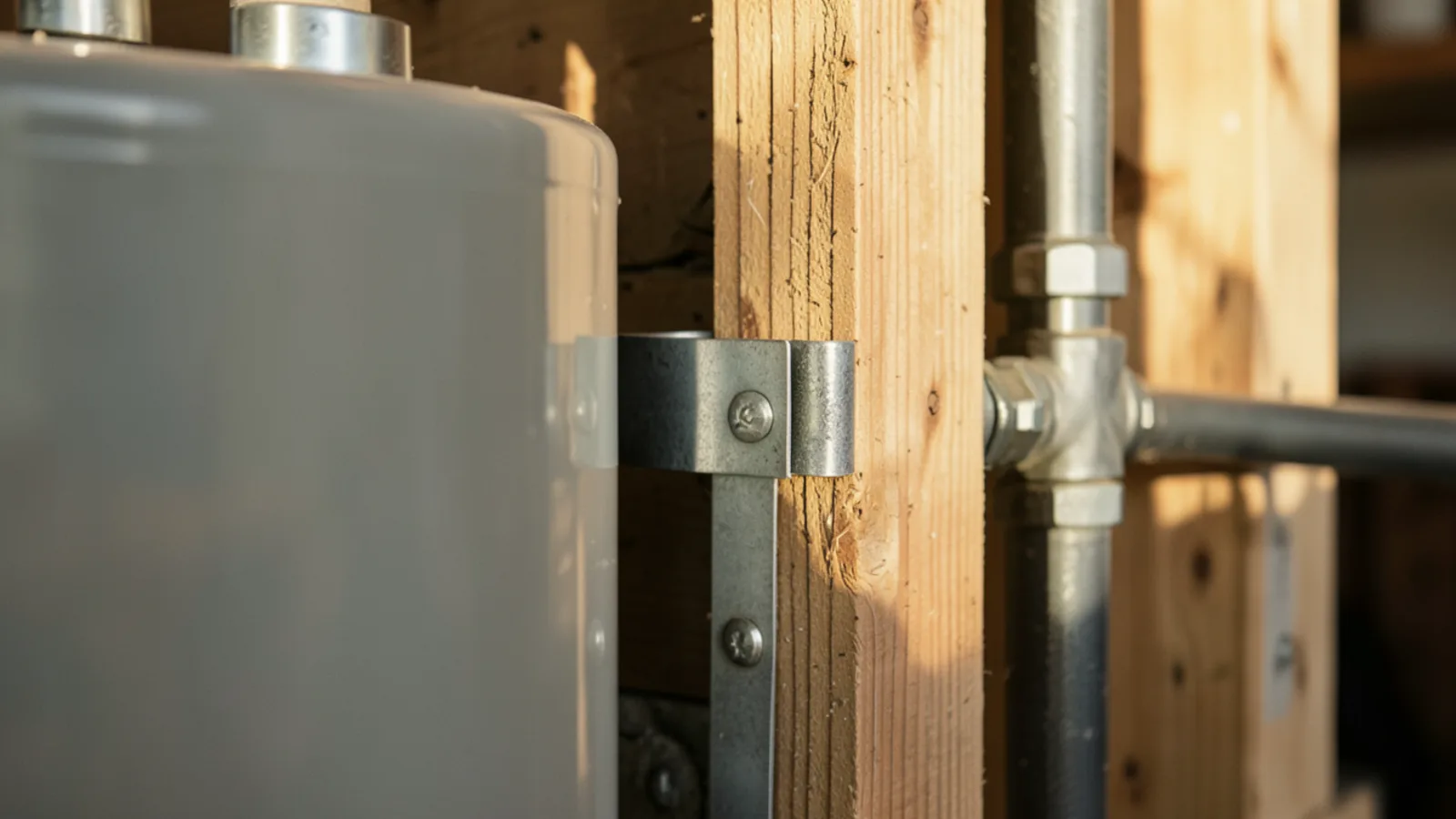
- •Two Straps Mandatory. All storage tanks up to 52 gallons must feature at least two heavy-gauge galvanized steel straps. Tanks larger than 52 gallons or commercial units require engineered seismic bracing.
- •Upper Third Placement. The upper strap must be positioned in the upper one-third of the tank body, providing overhead tipping resistance.
- •Lower Third Placement. The lower strap must be positioned in the lower one-third of the tank body, positioned at least 4 inches above the thermostat control valve.
- •Structural Wall Stud Anchor Bolts. Straps must be anchored into 2x4 structural wall framing studs using minimum 5/16-inch by 3-inch heavy-duty lag bolts with wide flat washers. Anchoring into sheetrock or hollow masonry with plastic drywall anchors fails inspection.
- •Wraparound Contact. Straps must wrap completely around the circumference of the tank with zero slack, securely fastened at the front with tension bolts.
Common DIY Strapping Mistakes That Fail Home Inspections
During real estate escrow transactions on the Peninsula, home inspectors and city building inspectors frequently cite non-compliant water heater bracing. Common errors include: using single plumber's tape (perforated metal ribbon) instead of certified heavy-gauge seismic straps; securing lag bolts into drywall without penetrating structural wood studs; placing the lower strap across the gas thermostat dial or burner access door; and failing to install a rear wooden spacer block when the tank sits more than 1 to 2 inches away from the wall.
Flexible Stainless Gas Lines and Automatic Earthquake Shutoff Valves
Strapping the tank is only half of the earthquake safety equation. Rigid black iron gas pipe connecting directly to a water heater will snap if the tank experiences even minor vibration. California code mandates the installation of an approved flexible corrugated stainless steel gas connector (CSST) between the gas shutoff valve and the burner assembly, providing flexibility during ground movement. Pairing this with an automatic seismic shutoff valve at the exterior gas meter provides complete household protection.
Closed Plumbing Systems & Mandatory Thermal Expansion Tanks
Under California Plumbing Code Chapter 5, whenever a water heating system is installed on a "closed" domestic water system (created by a municipal backflow preventer or pressure reducing valve), an approved thermal expansion tank is mandatory. When water is heated, it expands in volume. In an open system, expanded water flows back into the city main; in a closed Peninsula system, this thermal expansion creates dangerous pressure spikes exceeding 120 PSI, which can rupture water heater tanks or blow out temperature-and-pressure (T&P) relief valves.
Point-of-Sale Compliance and Disclosure Obligations
Under California law, sellers of residential real estate must deliver a written Water Heater Compliance Statement (Form WHD) to the buyer certifying that the water heater has been strapped in accordance with Health and Safety Code Section 19211 prior to closing escrow. Failure to provide this signed certification can delay loan approval and create post-closing liabilities.
Technical Field Visuals & Reference Equipment
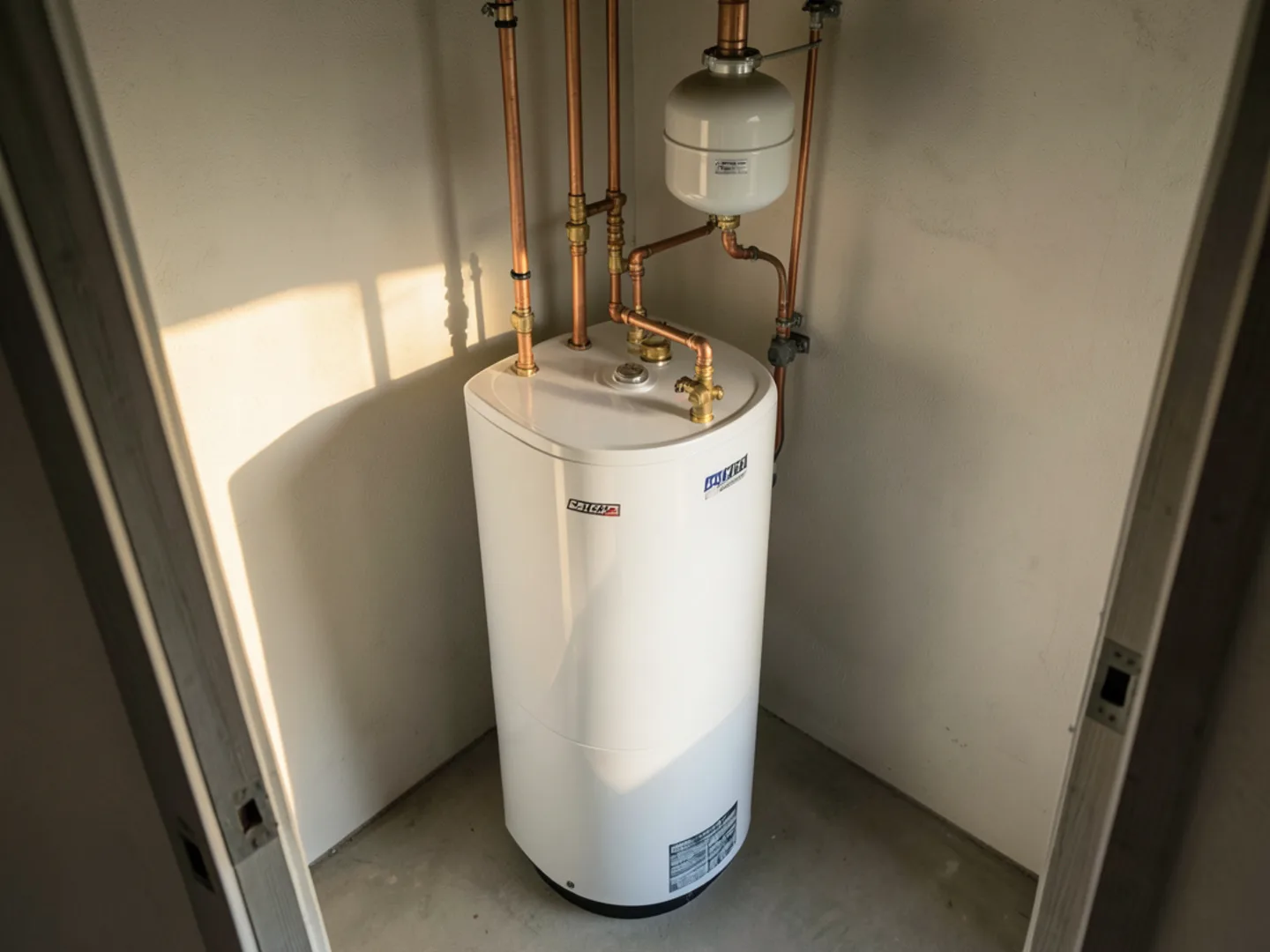
A modern gas water heater setup installed in a Peninsula home garage
California-compliant double seismic strapping securing a garage water heater against earthquake movement

Seismic gas shutoff valve designed to automatically stop natural gas flow during earthquake shaking
Conclusion & Next Steps for Peninsula Property Owners
Addressing urgent plumbing faults across San Mateo County requires balancing immediate safety isolation with long-term code compliance. Whether dealing with a sudden slab leak, earthquake gas shutoff compliance, or an aging sewer lateral, working with a licensed Class C-36 contractor guarantees proper permits and durable repairs.
Questions Addressed in This Guide
Specific answers addressing safety protocols, local building codes, and diagnostic steps.
No. California Health and Safety Code Section 19211 legally requires at least two straps—one in the upper third and one in the lower third of the tank—regardless of whether the water heater is 30, 40, or 50 gallons.
Verified Research Sources & Regulatory References
The technical, legal, and regulatory statements on this page are corroborated against publicly accessible municipal codes, state licensing statutes, and utility guidelines:
- •California Health & Safety Code 19211 — California Health and Safety Code Section 19211: Earthquake Bracing Requirements for Water Heaters.
- •Division of the State Architect Guidelines — California Department of General Services (DSA): Guidelines for Earthquake Bracing of Residential Water Heaters.
- •California Plumbing Code Ch 5 — 2022 California Plumbing Code Section 507.2: Seismic Protection and Thermal Expansion Tanks.