
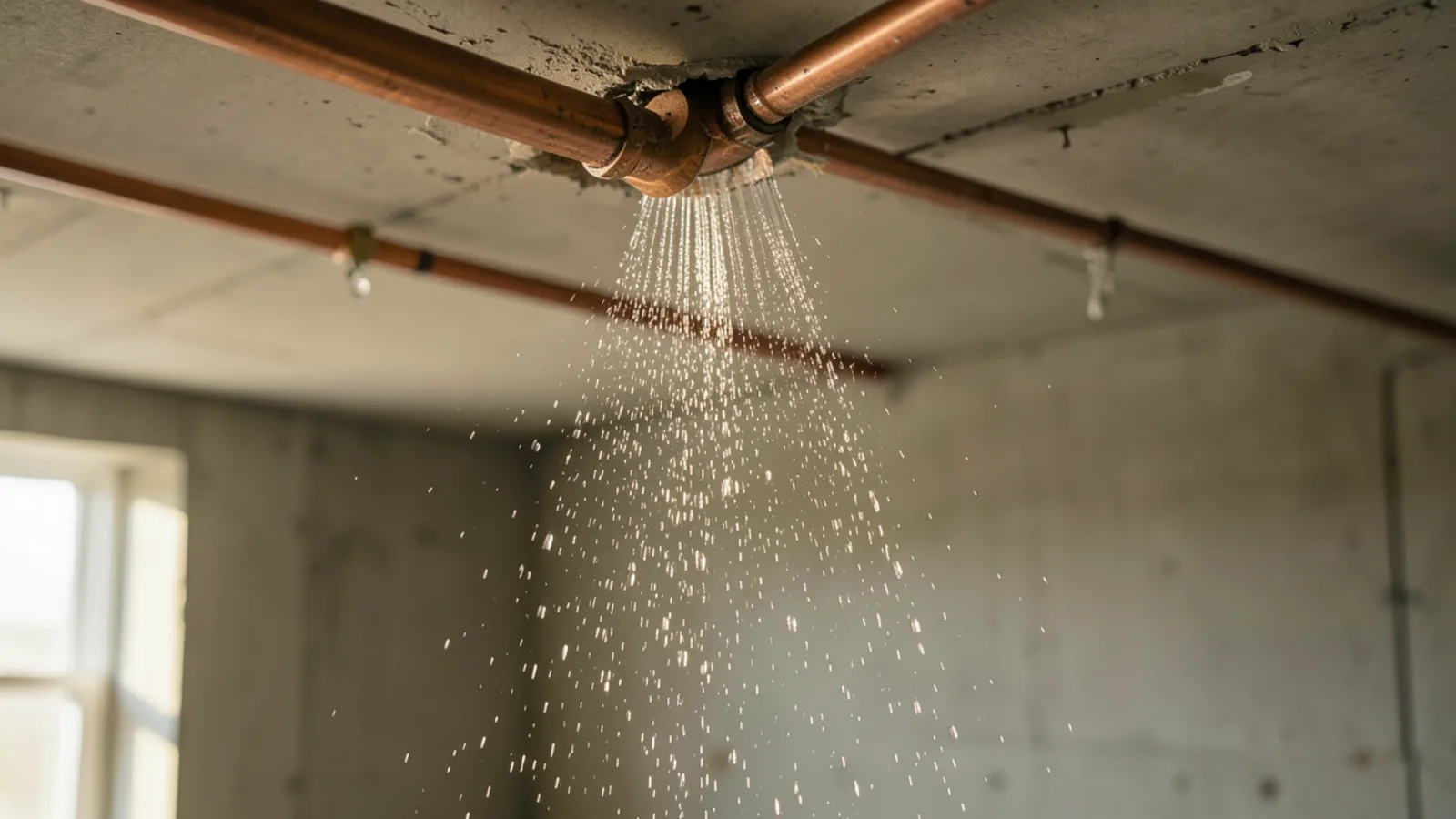
Act Fast: The First Critical 5 Minutes
Pressurized residential water lines in San Mateo County typically operate between 50 and 80 PSI. When a 1/2-inch or 3/4-inch copper or galvanized supply pipe ruptures, it discharges between 10 and 15 gallons of water per minute into your living space. Within just five minutes, over 60 gallons of water will saturate sheetrock, warp hardwood flooring, and penetrate floor assemblies into lower levels or crawlspaces. Taking calm, decisive action during the opening minutes is the single most critical factor in preventing tens of thousands of dollars in structural restoration costs.
Need Immediate Plumbing Assistance?
Call (321) 559-0657 to connect directly with an independent local plumber in San Mateo County.
The First-30-Minutes Emergency Action Protocol
Follow this sequential protocol to protect your household, isolate the water source, and preserve your rights during insurance claims adjustment.
- •Step 1: Shut off the main water valve. Turn the brass ball valve handle perpendicular to the pipe (or turn a gate wheel completely clockwise until firmly seated).
- •Step 2: Relieve residual trapped water pressure by opening the lowest exterior garden hose bib until water stops flowing entirely.
- •Step 3: Eliminate electrical shock hazards. If water is pooling near appliances, extension cords, or baseboard heaters, trip the main breaker panel from a completely dry location.
- •Step 4: Capture date-stamped video and high-resolution photos of all affected rooms, ceilings, baseboards, and damaged personal belongings before moving or mopping them.
- •Step 5: Call for emergency plumbing dispatch at (321) 559-0657 to route an independent local contractor to isolate and perform permanent line repairs.
- •Step 6: Begin clean-water containment using buckets, mops, and towels, and arrange professional dehumidification within 24 to 48 hours.
Locating the Main Water Shutoff Valve in San Mateo Homes
Knowing where your main water shutoff valve is located before an emergency occurs saves precious minutes. In single-family homes across San Mateo, Burlingame, and Belmont, the shutoff valve is almost always found in one of three standard locations: on the exterior front wall where the main copper service riser enters the foundation directly below the hose bib; inside an attached garage near the water heater; or in an underground concrete meter box set into the sidewalk near the street curb. If your valve is a lever-style ball valve, turn it 90 degrees so the handle sits crosswise against the pipe. If it is an older round wheel gate valve, turn it clockwise until it stops. If the valve is corroded or seized, do not force it with excessive leverage; call emergency dispatch immediately.
Understanding the EPA 24–48 Hour Drying Rule
The United States Environmental Protection Agency (EPA) emphasizes that mold and fungal spores can germinate on moist organic materials—such as sheetrock paper, carpet padding, and wood subfloors—within 24 to 48 hours of clean water exposure. Even if an emergency plumber repairs the ruptured pipe in two hours, building assemblies must be actively dried with industrial air movers and dehumidifiers to ensure indoor air quality remains safe. Porous insulation that has absorbed water inside wall cavities must usually be opened and extracted to prevent hidden toxic mold colonies.
Why Pipes Burst in Peninsula Homes: Local Infrastructure Causes
San Mateo rarely experiences freezing winter temperatures that cause burst pipes in colder climates. Instead, pipe bursts in Peninsula homes stem from aging mid-century infrastructure. Post-war homes built in the 1940s through 1960s feature original galvanized steel supply lines. Over 70 years, internal rust and mineral scale dissolve the pipe walls from the inside out, creating paper-thin seams that rupture under normal household pressure spikes. In bay-fill communities like Foster City and Redwood Shores, settling soils exert mechanical shear stress on under-slab copper lines.
Insurance Claim Documentation: What Adjusters Require
Most standard California homeowners insurance policies cover sudden and accidental water damage resulting from a burst pipe, including structural drying, drywall replacement, and ruined flooring. However, policies almost always exclude the specific plumbing repair invoice to fix the pipe itself. To protect your claim, take continuous video walking through the damage before touching anything. Keep the ruptured section of pipe that the plumber removes; insurance adjusters frequently inspect the physical pipe to confirm the failure was sudden rather than a long-term neglected leak.
Permanent Repair Options: PEX-a vs. Type L Copper
When repairing a ruptured water line, homeowners must choose between spot repairs and modern whole-home repiping. While a slip coupling or brass press fitting provides an immediate emergency patch, adjacent sections of aged piping remain vulnerable to future bursts. Replacing aging galvanized or failing slab lines with Uponor PEX-a expansion piping routed through attic and wall spaces bypasses concrete slabs entirely and provides flexible seismic resistance during earthquakes.
| Factor | Uponor PEX-a Tubing | Type L Rigid Copper | Galvanized Steel (Aged) |
|---|---|---|---|
| Expected Lifespan | 50+ Years | 50+ Years | Terminal Failure (>50 yrs) |
| Earthquake Flexibility | High (expands & bends) | Rigid (can shear) | Brittle (threads snap) |
| Corrosion Resistance | Immune to scale & acid | Susceptible to acidic soils | Severe internal rust |
| Installation Method | Continuous runs, minimal joints | Soldered / press fittings | Threaded iron couplings |
Technical Field Visuals & Reference Equipment
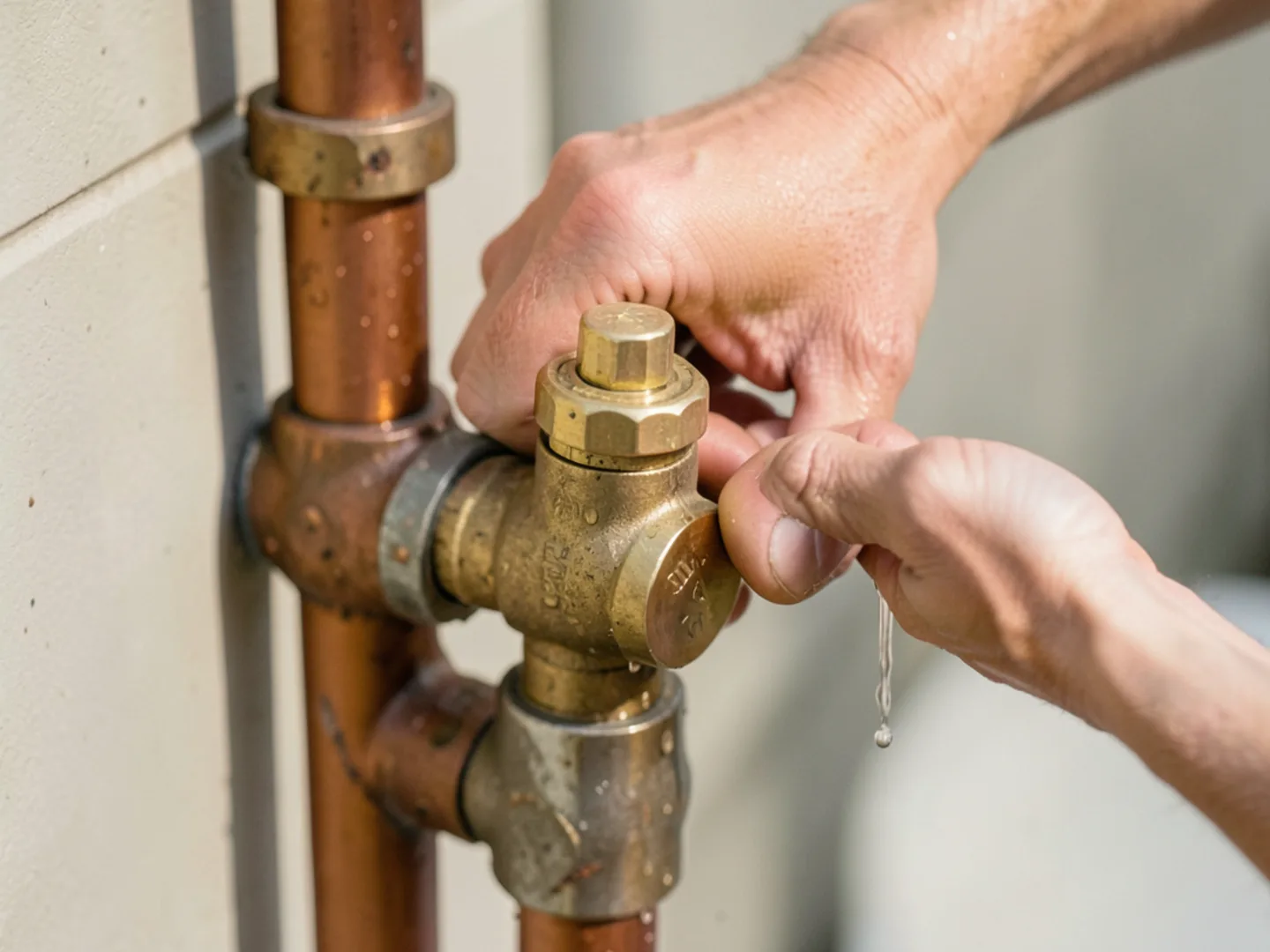
Turning the main water shutoff valve clockwise immediately stops pressurized flooding
A clean copper water supply pipe joint installed to California plumbing standards
Water utility meter dial showing the low-flow indicator used to identify hidden plumbing leaks
Conclusion & Next Steps for Peninsula Property Owners
Addressing urgent plumbing faults across San Mateo County requires balancing immediate safety isolation with long-term code compliance. Whether dealing with a sudden slab leak, earthquake gas shutoff compliance, or an aging sewer lateral, working with a licensed Class C-36 contractor guarantees proper permits and durable repairs.
Questions Addressed in This Guide
Specific answers addressing safety protocols, local building codes, and diagnostic steps.
In most Peninsula single-family homes, the main shutoff valve is located outside near the front hose bib where the water pipe enters the foundation, or mounted on an interior wall inside the attached garage.
Verified Research Sources & Regulatory References
The technical, legal, and regulatory statements on this page are corroborated against publicly accessible municipal codes, state licensing statutes, and utility guidelines:
- •EPA Mold Remediation Guide — United States Environmental Protection Agency: Mold Remediation in Schools and Commercial Buildings (EPA 402-K-01-001).
- •IICRC S500 Standard — Institute of Inspection Cleaning and Restoration Certification: ANSI/IICRC S500 Standard and Reference Guide for Professional Water Damage Restoration.
- •City of San Mateo Building Division — City of San Mateo Community Development Department Plumbing Guidelines.